


Foot Corn Pain Treatment: How to Get Permanent Relief Through Orthotics and Expert Foot Care in Delhi NCR
Updated: Mar 31
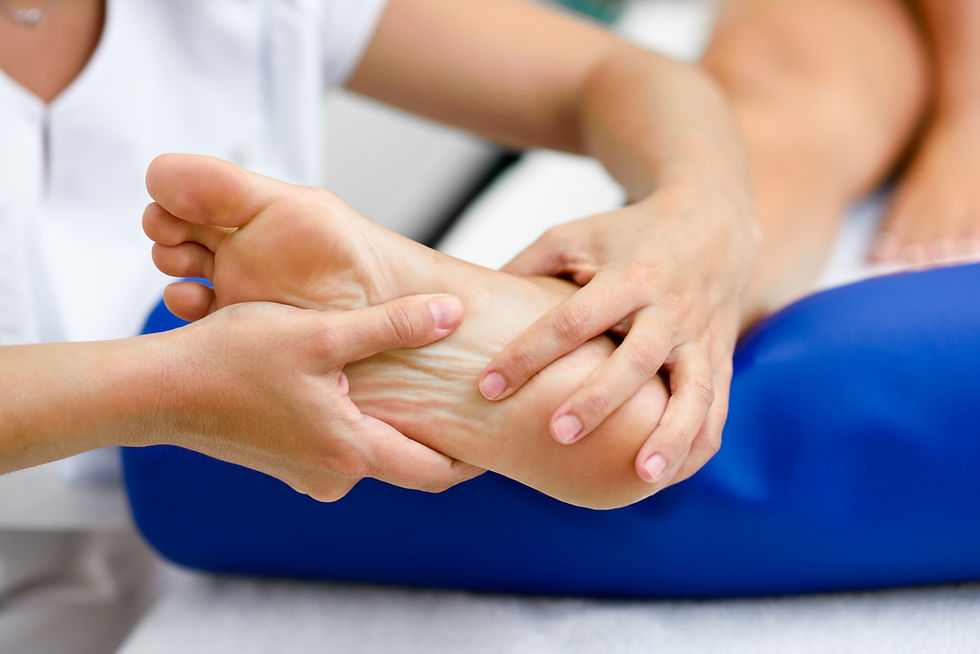
That small, hardened lump on your toe or the sole of your foot may seem minor — until it makes every single step feel like walking on a pebble with a sharp core. Foot corns are one of the most common and most painful foot conditions, affecting people of all ages and backgrounds. They appear without warning, grow progressively more uncomfortable, and have a frustrating tendency to return even after home treatment.
If you are searching for effective foot corn pain treatment — not just a temporary fix, but a solution that actually addresses why the corn formed in the first place — this guide is for you. We explain exactly what foot corns are, why they keep coming back, what treatments genuinely work (including non-surgical options through custom orthotics), what to avoid, and how specialist foot corn treatment in Delhi NCR can give you the lasting relief you have been looking for.
What Is a Foot Corn? Understanding the Condition
A foot corn — medically known as a heloma or clavus — is a localised, cone-shaped area of thickened skin that develops in response to repeated friction or pressure on a specific point of the foot. Unlike a callus, which is a flat, broader area of hardened skin, a corn has a distinct hard central core (the nucleus) that points inward toward the underlying tissue and nerves. It is this inward-pointing core that makes corns so disproportionately painful relative to their small size: the core acts like a spike, pressing directly on the nerve endings and sensitive tissue beneath the skin with every step.
Clinically, corns are classified as a form of hyperkeratosis — an abnormal thickening of the outer layer of skin (the stratum corneum) triggered by the body's protective response to chronic friction or pressure. The skin thickens in an attempt to protect the underlying structures, but the resulting corn then creates pressure of its own, setting up a self-perpetuating cycle of pain and tissue stress Types of Foot Corns: Hard, Soft, and Seed
Type | Medical Name | Location | Appearance | Pain Level |
Hard Corn | Heloma Durum | Top/sides of toes, ball of foot | Firm, yellow, raised core | High — sharp, stabbing |
Soft Corn | Heloma Molle | Between toes (web spaces) | White, rubbery, macerated | High — burning, raw |
Seed Corn | Heloma Miliare | Sole (plantar surface) | Tiny clusters of hard dots | Moderate — aching |
Vascular Corn | Heloma Vasculare | Any pressure point | Hard corn with blood vessels | Very High — bleeds if pared |
Neurovascular Corn | Heloma Neurovasculare | Any pressure point | Corn with nerve involvement | Severe — constant pain |
Hard Corns — Heloma Durum
The most common type. Hard corns develop on bony prominences — the tops and sides of toes (especially the little toe), the ball of the foot, and the heel. They feel firm to the touch, appear yellowish or grey, and have a clearly defined hard central core. Hard corns are particularly common where shoes rub against a bony prominence, such as on the fifth toe where footwear applies lateral pressure, and on the second toe when a hammer toe deformity causes the toe knuckle to rub against the shoe upper.
Soft Corns — Heloma Molle
Soft corns develop exclusively between the toes, typically in the fourth web space (between the fourth and fifth toes). Moisture from perspiration keeps the corn soft and rubbery rather than hard. They appear whitish or grey, feel spongy, and are often mistaken for fungal infections. Despite their soft texture, soft corns are intensely painful — the skin is raw and macerated, and the nerve involvement between the toes is significant. The cause is almost always bony prominences on adjacent toes pressing against each other within a narrow shoe.
Seed Corns — Heloma Miliare
Seed corns appear as small clusters of tiny, hard dots on the plantar (sole) surface of the foot, often at the heel or ball of the foot. They are much smaller than hard corns and are associated with dry skin and blocked sweat ducts. Though individually smaller, they can cause significant aching pain during walking, particularly on hard surfaces.
IMPORTANT: If your corn bleeds easily when pared, has an irregular border, or has persisted despite treatment for many months, seek specialist assessment promptly. Rarely, what appears to be a corn may be a plantar wart or, in very rare cases, a skin lesion requiring proper diagnosis.
What Causes Foot Corns? The Root Causes Most People Miss
Most people assume foot corns are simply caused by ill-fitting shoes — and while footwear is a major contributor, it is rarely the whole story. Understanding the actual root cause of your corn is the single most important step in achieving permanent removal rather than temporary relief.
Footwear Problems
Narrow toe boxes, pointed shoes, high heels, and shoes that are too short all create localised pressure and friction on the toes and forefoot. High heels increase forefoot loading by up to 76% compared to flat shoes, dramatically raising the pressure on the ball of the foot and the toes. Conversely, shoes that are too loose allow the foot to slide forward repeatedly, causing friction at the toes with every step.
Biomechanical Abnormalities — The Most Overlooked Cause
This is the factor most people and even some healthcare providers overlook. Many recurrent or treatment-resistant corns are caused not by shoes alone but by abnormal foot mechanics — the way the foot loads and moves through the gait cycle. Overpronation (flat feet rolling inward) shifts pressure onto the inner forefoot and big toe joint. Supination shifts it to the outer forefoot and fifth toe. High-arched feet concentrate pressure under the metatarsal heads. These mechanical patterns create persistent, localised high-pressure zones that form corns regardless of which shoes are worn — which is why changing shoes alone rarely provides lasting relief.
Structural Toe Deformities
Hammer toes, claw toes, and mallet toes create bony prominences on the toe knuckles that press relentlessly against shoe uppers, generating hard corns on the top of the affected toe. Bunions (hallux valgus) create a prominent medial first metatarsal head that forms corns on the inner aspect of the great toe joint. These structural deformities are progressive — they worsen over time if not addressed — and the corns associated with them will recur indefinitely unless the underlying deformity is managed.
Gait Abnormalities and Muscle Imbalances
Asymmetric walking patterns, leg length discrepancy, tight calf muscles, and weak intrinsic foot muscles all alter how pressure is distributed across the foot surface during walking. These gait abnormalities create predictable high-pressure zones where the skin responds by thickening — forming corns. Without correcting the underlying gait mechanics, corn treatment alone is futile in the long term.
Other Contributing Factors
• Going barefoot on hard floors for extended periods
• Occupations requiring prolonged standing or walking
• Ageing (the fat pad under the forefoot naturally thins after age 40, reducing natural cushioning)
• Poorly fitting or absent socks (friction without a protective layer)
• Excessive sweating, which softens skin and increases susceptibility to pressure damage
What NOT to Do: Common Mistakes That Make Corn Pain Worse
Before covering what works, it is equally important to understand what to avoid — because several common home remedies actively harm rather than help.
Do Not Use Corn Plasters (Salicylic Acid Pads) Without Guidance
Over-the-counter corn plasters containing salicylic acid are widely available and heavily marketed, but they carry significant risks. Salicylic acid softens and breaks down skin indiscriminately — it cannot differentiate between corn tissue and healthy surrounding skin. Improper application frequently causes chemical burns to healthy skin, creating open wounds, infection risk, and in people with diabetes or poor circulation, serious ulceration. NCBI clinical guidance specifically warns that these products should only be used under professional supervision and should never be used by people with diabetes, peripheral vascular disease, or reduced foot sensation.
Never Cut or Shave a Corn Yourself
Attempting to cut or shave a corn with scissors, razor blades, or corn-removal tools at home is one of the most common causes of serious foot infections presenting to podiatric clinics. The risk of cutting too deeply, contaminating the wound, and triggering a soft tissue infection — particularly dangerous in people with diabetes — is significant. Professional debridement by a trained specialist is a controlled, precise procedure performed in a clinical environment; home attempts are not.
Avoid Cryotherapy for Corns
The NCBI StatPearls clinical database specifically identifies cryotherapy (liquid nitrogen freezing) as a frequent clinical pitfall in corn treatment. Unlike warts, corns have no viral component, and freezing the tissue damages the normal skin surrounding the corn without resolving the underlying pressure cause. This often worsens pain and surrounding tissue damage without removing the corn.
Do Not Ignore a Recurrent Corn
If a corn has been treated — whether at home or professionally — and returns within weeks or months, this is a clear signal that the underlying cause (biomechanical pressure point) has not been addressed. Repeatedly removing the corn without addressing the root cause is like mopping the floor while the tap is still running. A structural assessment and orthotic intervention are needed.
If you are diabetic or have any circulatory condition: Never attempt home treatment of foot corns. Impaired sensation means you may not feel damage until it is serious. Any foot corn in a person with diabetes requires professional assessment and treatment — this is a clinical priority, not a cosmetic inconvenience.
Foot Corn Pain Treatment: What Actually Works
1. Professional Debridement — Immediate Pain Relief
The most immediate treatment for a painful foot corn is professional debridement — the controlled, precise paring of the corn's surface layers and removal of the central nucleus by a trained specialist using sterile scalpel blades. When performed correctly, this provides dramatic, often instant pain relief because removing the hard core immediately eliminates the pressure on the underlying nerves. The skin is prepared with warm water soaking beforehand, and the procedure is typically painless. Debridement is safe, quick, and highly effective for acute corn pain — however, without addressing the underlying pressure cause, the corn will reform.
2. Corn Treatment Through Orthotics — The Key to Permanent Relief
This is the most clinically significant treatment for recurrent or biomechanically driven corns, and it is the approach that differentiates a specialist foot clinic from a basic corn removal service. Custom foot orthotics — individually designed insoles fabricated to the exact contours of your foot — work by redistributing pressure away from the corn site during walking. Rather than removing the corn and leaving the underlying pressure unchanged, orthotics eliminate the mechanical stimulus that causes the skin to thicken in the first place.
Different orthotic solutions are used depending on the type and location of the corn:
• Metatarsal pads and domes: Placed proximal to the metatarsal heads to offload forefoot pressure points — the most common site for hard corns on the ball of the foot.
• Dancer's pads: Custom-shaped offloading pads that relieve pressure directly beneath a specific metatarsal head or sesamoid.
• Full-length custom insoles: For patients with biomechanical overpronation, high arches, or leg length discrepancy, a full-length custom orthotic corrects the gait mechanics that are generating the high-pressure zones.
• Silicone toe sleeves and separators: Medical-grade silicone devices that cushion toe corns and prevent adjacent toe friction — the primary treatment for soft corns between toes.
• Digital orthoses (toe props and crests): Small orthotic devices that correct hammer toe or claw toe positions, reducing the dorsal corn-generating pressure on the toe knuckle.
The clinical evidence strongly supports orthotic intervention as the cornerstone of permanent corn management. Studies confirm that when pressure redistribution is achieved through custom orthotics, corn recurrence rates fall dramatically compared to debridement alone. At The Rehab Street, every corn treatment plan includes a biomechanical assessment to determine whether orthotic intervention is appropriate for that patient's specific pressure pattern.
3. Footwear Assessment and Modification
No corn treatment programme is complete without a thorough assessment of the patient's footwear. Even the most precisely designed orthotic cannot compensate for a shoe that applies direct pressure to a corn site. At The Rehab Street, our specialists assess whether your current footwear has an adequate toe box width, sufficient depth to accommodate an orthotic, appropriate heel height for your foot type, and a suitable insole material. In cases where no commercially available shoe meets the patient's needs — particularly for complex hammer toe or forefoot deformity cases — customised therapeutic footwear can be fabricated.
4. Keratolytic Therapy — Targeted Skin Softening
Under professional supervision, topical keratolytic agents (compounds that soften and break down thickened skin) can be used to reduce corn thickness between debridement sessions. Clinically prescribed formulations containing urea (20–40%) or salicylic acid at controlled concentrations are applied specifically to the corn tissue under specialist guidance. These are different from over-the-counter corn plasters in that they are prescribed at appropriate concentrations, applied with precise technique, and used alongside protective measures to avoid damage to surrounding healthy skin.
5. Protective Padding
Donut-shaped foam or silicone protective pads can provide symptomatic pain relief by redistributing pressure around (rather than directly onto) the corn. These are appropriate for short-term pain management while a definitive orthotic solution is being fabricated, or as an adjunct to ongoing treatment. Foam pads are temporary; silicone-based medical-grade devices are more durable and better tolerated for prolonged use.
6. Surgical Treatment — When Is It Needed?
Surgery for foot corns is genuinely a last resort — indicated only when the corn is driven by an underlying bony deformity that cannot be managed conservatively. Examples include hammer toe deformities causing persistent dorsal corns that do not respond to all conservative measures, and bony prominences generating intractable corns with neurovascular involvement. Procedures typically involve correction of the underlying deformity (arthroplasty or arthrodesis of the affected toe joint) rather than simply excising the corn. A 2021 study published in a clinical journal showed 100% 'very good or excellent' patient satisfaction with surgical correction in appropriately selected cases — however, surgery always carries risks that make non-surgical management the priority in every case.
The Complete Foot Corn Treatment Plan at The Rehab Street
At The Rehab Street, we take a structured, evidence-based approach to foot corn treatment that goes beyond simple removal. Here is what a comprehensive treatment pathway looks like:
1. Initial assessment: A detailed clinical examination of the corn's type, size, depth, location, and surrounding tissue condition. We assess your foot structure, toe alignment, arch type, and gait pattern to identify the underlying biomechanical cause.
2. Debridement: Immediate removal of the corn's surface and central nucleus using sterile instruments for prompt pain relief.
3. Biomechanical analysis: Gait assessment and foot pressure mapping to identify the specific loading pattern generating the high-pressure zone.
4. Orthotic prescription: Design and fabrication of the appropriate orthotic device — from a simple silicone toe sleeve to a full-length custom insole — tailored to your foot mechanics and the corn's location.
5. Footwear guidance: Assessment of current footwear with specific recommendations for appropriate shoe features, last width, and toe box depth.
6. Skin care protocol: A prescribed regimen of moisturisation, gentle exfoliation, and protective measures to maintain skin health between appointments.
Follow-up and review: Regular review appointments to assess corn recurrence, orthotic function, and footwear compliance. Adjustments to the orthotic prescription as needed
Who Is Most at Risk of Foot Corns?
While anyone can develop foot corns, certain groups are significantly more susceptible and require extra vigilance:
• People with diabetes: Reduced sensation (peripheral neuropathy) means corns can progress to ulcers before pain signals a problem. Any corn in a diabetic patient is a clinical priority.
• Elderly individuals: Natural fat pad atrophy under the forefoot reduces cushioning, increasing pressure on bony points. Reduced skin elasticity makes the elderly more prone to corn formation and more vulnerable to complications.
• People with hammer toes, bunions, or claw toes: Structural deformities create permanent pressure points that generate corns regardless of footwear choice.
• Professional athletes and runners: High repetitive loading on specific foot areas, combined with the friction of athletic footwear during high-mileage training, creates favourable conditions for corn development.
• People in occupations requiring prolonged standing: Nurses, teachers, factory workers, chefs, and retail staff accumulate enormous foot loading hours daily — making forefoot pressure management essential.
• Those with flat feet or high arches: Both foot types generate abnormal pressure distributions that predispose specific areas to corns.
How to Prevent Foot Corns From Returning
Prevention is where orthotic management makes the most decisive long-term difference. These are the evidence-based strategies for keeping corns from returning after treatment:
Wear Properly Fitted Footwear
Shoes should have a toe box wide enough to accommodate all toes without compression, sufficient length so the longest toe has at least a thumbnail's width of clearance from the end, and adequate depth for the orthotic if one is being used. Get feet measured in the afternoon when they are at their largest. Avoid pointed toe boxes, heels above 4 cm for daily wear, and shoes that allow forward sliding.
Use Prescribed Custom Orthotics Consistently
If biomechanical pressure redistribution has been the driver of your corns, discontinuing orthotic use will almost certainly result in recurrence. Custom orthotics should be worn in appropriate footwear during all weight-bearing activity. Most custom orthotics last 2–5 years depending on material and usage before requiring replacement.
Maintain Foot Skin Health
Keeping the skin of the feet adequately moisturised prevents the dryness and skin fragility that makes corn formation more likely. Apply a urea-based foot cream (10–20%) daily, especially to the forefoot and heels. Do not over-moisturise between the toes — moisture in the web spaces increases soft corn risk.
Address Toe Deformities Early
Hammer toes and claw toes worsen progressively if untreated. Early management with toe orthoses, stretching, and footwear modification can slow progression and prevent the structural deformity from reaching the stage where surgical correction becomes necessary.
Frequently Asked Questions About Foot Corn Treatment
Can a foot corn be removed permanently without surgery?
Yes — in the majority of cases. When the corn is caused by biomechanical pressure (rather than a fixed bony deformity), combining professional debridement with custom orthotics and appropriate footwear addresses both the corn itself and the underlying pressure cause. Recurrence rates drop dramatically with orthotic management. Surgery is reserved for cases driven by rigid structural deformities that cannot be offloaded through conservative means.
How long does professional foot corn treatment take?
The initial debridement appointment takes approximately 30–45 minutes. Custom orthotic fabrication typically requires 2–3 appointments over 2–4 weeks (assessment, casting, and fitting). For mild corns in patients with straightforward biomechanics, improvement is often achieved within a single treatment cycle. For complex or long-standing corns with significant structural involvement, a longer treatment programme with regular reviews may be needed.
Is corn treatment painful?
Professional debridement is generally not painful and is often immediately pain-relieving, as removing the corn's nucleus directly reduces the pressure on the underlying nerves. The area may be tender for a day or two after debridement. The orthotic fitting process is non-invasive and entirely painless.
Why do corns keep coming back after treatment?
Recurring corns are the clearest sign that the root cause — the mechanical pressure point — has not been addressed. Debridement alone removes the corn but does nothing to change the gait mechanics, foot structure, or footwear that generated it. If your corn has recurred more than twice, a biomechanical assessment and orthotic prescription are essential components of any further treatment.
Is there a good foot corn doctor near me in Delhi NCR?
The Rehab Street operates specialist foot and ankle clinics in Delhi and Gurgaon, providing comprehensive foot corn treatment including professional debridement, biomechanical assessment, custom orthotics, and footwear guidance. Our team of qualified orthotists has extensive experience in both the immediate treatment of painful corns and the long-term management of the underlying conditions that cause them to recur.
Can diabetic patients receive corn treatment?
Yes — but it must be performed by a specialist with experience in diabetic foot care. Self-treatment of foot corns by people with diabetes is strongly discouraged due to the risk of ulceration and infection from reduced sensation. At The Rehab Street, our team has experience managing foot corns in diabetic patients with appropriate clinical protocols to ensure safe, effective treatment and ongoing monitoring.
Stop Living With Corn Pain — Get Specialist Treatment in Delhi NCR
Foot corns are not something you have to simply live with, manage indefinitely with corn plasters, or accept as an inevitable consequence of ageing or an active lifestyle. With the right combination of professional debridement, custom orthotic pressure redistribution, targeted footwear guidance, and skin care management, the vast majority of foot corns can be treated effectively and prevented from returning.
The key is treating the cause, not just the corn. A corn that keeps coming back is your foot telling you that something about the way it is loading, moving, or being supported needs to change. At The Rehab Street, our specialist team has the clinical expertise, the biomechanical assessment capabilities, and the orthotic fabrication facilities to identify exactly what that change needs to be — and to make it happen.
Whether you are dealing with a single painful corn that has appeared for the first time or years of recurrent corns that home treatment has never resolved, our team is ready to help. Clinics in Delhi and Gurgaon. No referral required. Same-week appointments available.



Comments