


How KAFO Orthosis Helps Polio Patients Walk Better Today
- 2 hours ago
- 4 min read

Many polio survivors continue to experience muscle weakness, knee instability, foot drop, and difficulty walking even years after recovery from the disease. These mobility challenges can affect independence, confidence, and quality of life.
Fortunately, modern KAFO Orthosis (Knee-Ankle-Foot Orthosis) solutions are helping polio patients walk more safely, comfortably, and efficiently than ever before.
If you are searching for a KAFO Orthosis in Delhi NCR or Gurgaon, understanding how this advanced mobility device works can help you make the right decision for long-term mobility and independence.
What Is a KAFO Orthosis?
A KAFO Orthosis (Knee-Ankle-Foot Orthosis) is a custom-designed supportive brace that stabilizes the knee, ankle, and foot. It is commonly prescribed for individuals experiencing lower limb weakness, paralysis, or instability caused by conditions such as:
Polio
Post-Polio Syndrome
Stroke
Spinal Cord Injury
Muscular Dystrophy
Nerve Injuries
Cerebral Palsy
The primary purpose of a KAFO is to improve walking ability by providing mechanical support to weakened muscles and joints.
Why Do Polio Patients Need a KAFO Orthosis?
Polio often leaves patients with weakened leg muscles that cannot adequately support body weight during walking.
Common challenges include:
Knee Buckling While Walking
Weak quadriceps muscles may cause the knee to collapse unexpectedly.
Foot Drop
Difficulty lifting the front portion of the foot can increase the risk of tripping.
Poor Balance and Stability
Muscle weakness can affect overall gait and posture.
Fatigue During Walking
Polio survivors often use excessive energy while walking, leading to faster exhaustion.
A properly fitted KAFO Orthosis helps compensate for these limitations and improves mobility.
How Does a KAFO Orthosis Improve Walking for Polio Patients?
1. Stabilizes the Knee Joint
One of the biggest advantages of a KAFO is knee stabilization.
The orthosis prevents sudden knee buckling and provides support during standing and walking.
2. Corrects Foot Drop
By controlling ankle movement, a KAFO helps lift the foot during walking and reduces the chances of stumbling.
3. Improves Walking Confidence
Many polio patients limit their movement due to fear of falling.
A KAFO Orthosis provides enhanced stability, allowing users to walk with greater confidence.
4. Reduces Energy Consumption
Walking becomes more efficient because the orthosis supports weakened muscles.
Patients often report less fatigue and improved endurance.
5. Promotes Better Posture
A properly aligned lower limb helps maintain a more natural walking pattern and posture.
Signs You May Need a KAFO Orthosis
You may benefit from a KAFO Orthosis if you experience:
Frequent falls
Knee instability
Foot drop
Difficulty standing for long periods
Weakness due to polio
Uneven walking pattern
Excessive fatigue while walking
Early assessment by an orthotics specialist can determine the most suitable solution.
Modern KAFO Orthosis vs Traditional Leg Braces
Many people still imagine bulky metal braces when they hear the term KAFO.
Today's advanced KAFO Orthosis solutions offer:
Traditional Braces | Modern KAFO Orthosis |
Heavy weight | Lightweight materials |
Limited comfort | Better comfort and fit |
Less mobility | Improved walking efficiency |
Basic support | Advanced joint control |
Poor aesthetics | Modern appearance |
Modern designs are customized to meet the patient's mobility goals and lifestyle needs.
What Is the Process of Getting a KAFO Orthosis?
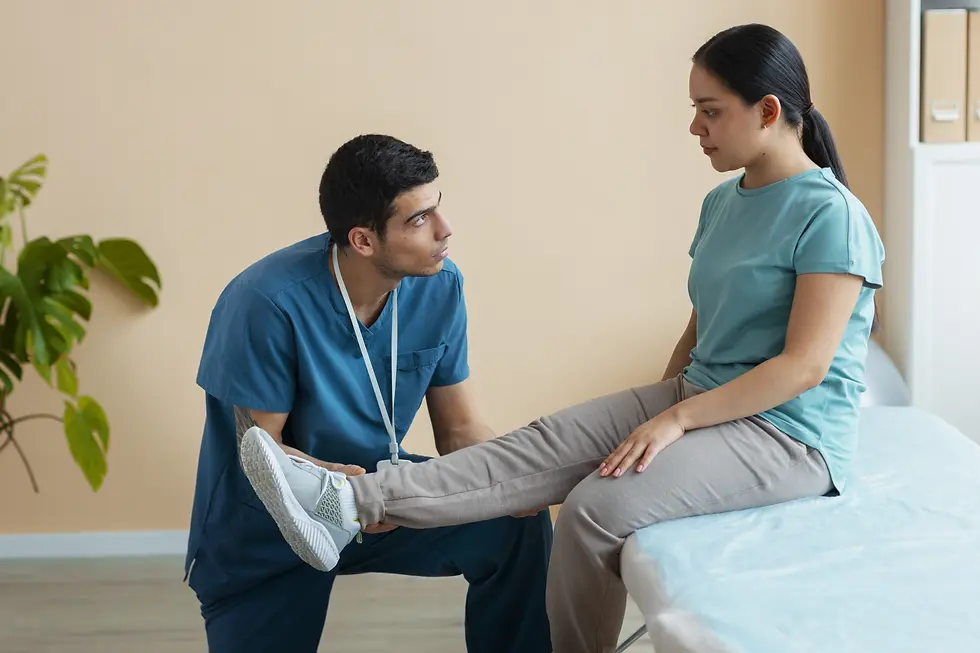
Step 1: Clinical Assessment
An orthotist evaluates:
Muscle strength
Joint stability
Walking pattern
Limb alignment
Daily activity requirements
Step 2: Measurement and Casting
Precise measurements ensure a customized fit.
Step 3: Fabrication
The orthosis is manufactured according to the patient's requirements.
Step 4: Fitting and Adjustment
Necessary adjustments are made for comfort and performance.
Step 5: Gait Training
Patients learn how to walk efficiently using their KAFO Orthosis.
Benefits of Choosing a Custom KAFO Orthosis
A custom-made KAFO provides:
Better walking stability
Reduced risk of falls
Improved balance
Enhanced mobility
Greater independence
Long-term joint protection
Improved confidence
Better quality of life
Where Can You Get KAFO Orthosis in Delhi NCR & Gurgaon?
THE REHAB STREET provides professional orthotic assessment, custom KAFO fitting, and rehabilitation support for patients with polio-related mobility challenges.
Their specialists focus on:
Customized KAFO Orthosis solutions
Gait analysis
Mobility improvement
Rehabilitation support
Long-term follow-up care
Whether you are searching for a KAFO Orthosis in Delhi NCR or a KAFO Orthosis in Gurgaon, expert evaluation is essential for achieving the best mobility outcomes.
Conclusion
Living with the effects of polio does not mean giving up your mobility or independence. A properly designed KAFO Orthosis can significantly improve walking ability, reduce falls, increase confidence, and support a more active lifestyle.
If you or a loved one is experiencing walking difficulties due to polio, consulting an experienced orthotics specialist can be the first step toward safer and more comfortable movement.
With modern KAFO Orthosis solutions available in Delhi NCR and Gurgaon, better mobility is more achievable than ever before.
FAQs
Can a KAFO Orthosis Help Polio Patients Walk Independently?
Yes. Many polio survivors experience improved stability, balance, and walking efficiency with a properly fitted KAFO.
Is a KAFO Orthosis Comfortable for Daily Use?
Modern custom KAFO designs are lightweight and designed for long-term wear.
How Long Does It Take to Adjust to a KAFO?
Most patients adapt within a few weeks, especially when combined with professional gait training.
Can Elderly Polio Survivors Use KAFO Orthosis?
Absolutely. KAFO Orthoses are commonly prescribed for older adults experiencing post-polio weakness.
How Do I Know Which KAFO Is Right for Me?
A professional orthotic assessment helps determine the most suitable design based on your strength, mobility, and lifestyle needs.
Comments