


Why Is Early Leg Caliper Intervention Important for Children with Neurological and Orthopedic Conditions?
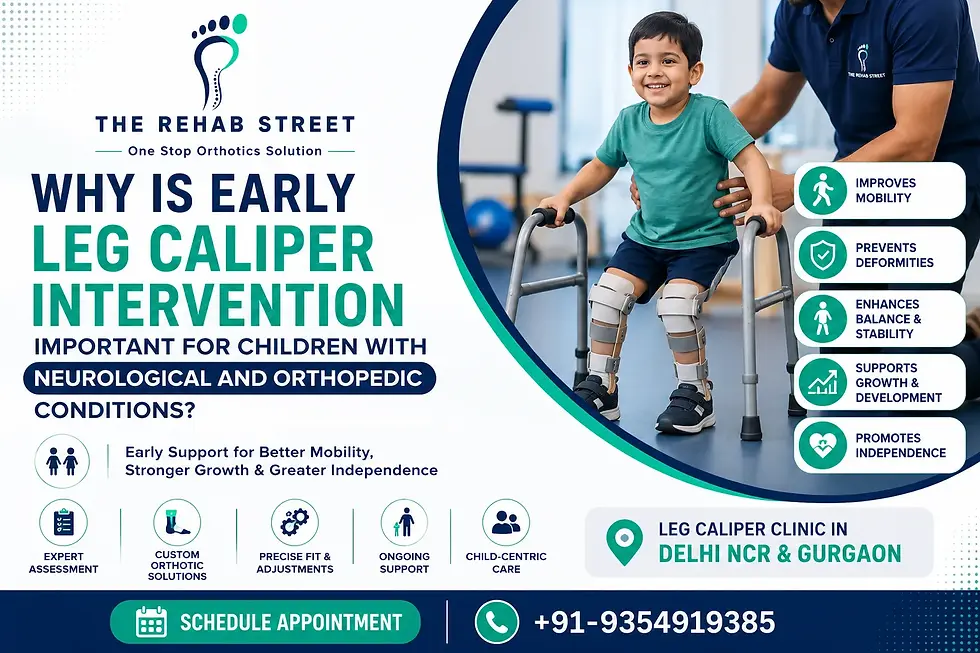
Children with neurological and orthopedic conditions often face challenges in standing, walking, maintaining balance, and participating in everyday activities. These mobility limitations can affect not only physical development but also a child's confidence, independence, and quality of life.
One of the most effective ways to support a child's mobility and long-term development is through early leg caliper intervention. Leg calipers, also known as lower limb orthoses, help improve alignment, provide stability, enhance walking ability, and prevent secondary complications.
This article explains why early intervention is important, which children may benefit from leg calipers, and how specialized orthotic care can positively influence long-term outcomes.
What Is a Leg Caliper?
A leg caliper is an orthopedic support device designed to improve lower limb alignment, stability, and mobility. These custom-made orthotic devices help children who have muscle weakness, neurological disorders, orthopedic deformities, or gait abnormalities.
Leg calipers are commonly prescribed to:
Support standing and walking
Improve balance and coordination
Correct lower limb alignment
Prevent deformities from worsening
Reduce strain on muscles and joints
Promote independent mobility
Modern pediatric calipers are lightweight, comfortable, and designed specifically according to each child's condition and growth requirements.
Why Is Early Leg Caliper Intervention Important?
Early intervention allows healthcare professionals to address mobility challenges before they become more severe.
When children receive orthotic support at the right stage of development, they are more likely to achieve better functional outcomes and maintain greater independence.
Key Benefits of Early Leg Caliper Intervention
1. Supports Normal Growth and Development
Children develop movement patterns during their early years. If mobility problems are left untreated, abnormal walking patterns may become permanent.
Early caliper use helps:
Promote proper posture
Encourage normal gait development
Improve weight-bearing ability
Support healthy musculoskeletal growth
2. Prevents Progressive Deformities
Neurological and orthopedic conditions often lead to muscle imbalances that gradually cause joint deformities.
Early orthotic management helps prevent:
Knee hyperextension
Foot deformities
Joint contractures
Rotational abnormalities
Postural deviations
Preventing these complications often reduces the need for future surgical intervention.
3. Improves Walking Ability
One of the primary goals of pediatric orthotic treatment is improving mobility.
Leg calipers help children:
Walk with greater stability
Improve step length
Reduce falls
Increase walking endurance
Gain confidence in movement
Improved mobility allows children to participate more actively in school, play, and social activities.
4. Enhances Balance and Stability
Many neurological conditions affect muscle control and balance.
Custom-designed leg calipers provide external support that helps:
Improve standing posture
Enhance balance control
Increase safety during movement
Reduce the risk of falls
This added stability often encourages children to become more physically active.
5. Promotes Independence
Early intervention empowers children to perform daily activities with less assistance.
With improved mobility, children can:
Walk independently
Participate in school activities
Engage in recreational play
Develop greater self-confidence
Independence is crucial for both physical and emotional development.
Which Conditions May Require Early Leg Caliper Intervention?
Leg calipers are commonly recommended for children diagnosed with neurological or orthopedic disorders.
Cerebral Palsy
Children with cerebral palsy often experience muscle tightness, weakness, and abnormal walking patterns.
Leg calipers can help improve gait efficiency and maintain joint alignment.
Spina Bifida
Children with spina bifida may require orthotic support to improve standing ability and mobility.
Muscular Dystrophy
Orthotic devices can provide stability and support weakened muscles during movement.
Clubfoot
Following corrective treatment, calipers may help maintain proper foot alignment and prevent recurrence.
Developmental Delays
Children with delayed motor development may benefit from orthotic support to improve balance and walking skills.
Post-Traumatic Orthopedic Conditions
Children recovering from fractures, surgeries, or lower limb injuries may require temporary orthotic support during rehabilitation.
Signs Your Child May Need a Leg Caliper
Parents should consider an orthotic evaluation if they notice:
Delayed walking milestones
Frequent falls
Toe walking
Uneven gait
Difficulty standing independently
Poor balance
Foot turning inward or outward
Joint instability
Muscle weakness
Early assessment allows specialists to identify issues before complications develop.
How Are Pediatric Leg Calipers Customized?
Every child has unique mobility needs.
A comprehensive assessment typically includes:
Physical Evaluation
Specialists assess:
Muscle strength
Joint range of motion
Walking pattern
Balance and posture
Functional abilities
Gait Analysis
Walking mechanics are carefully evaluated to identify movement abnormalities.
Custom Orthotic Design
Based on the assessment, orthotists design personalized calipers that provide optimal support while allowing natural movement.
Regular Monitoring
Because children grow rapidly, periodic adjustments are necessary to ensure continued effectiveness and comfort.
FAQs:
At What Age Can a Child Start Using Leg Calipers?
Children can begin using leg calipers as soon as a specialist identifies a mobility or alignment issue. Early intervention often provides the best outcomes.
Can Leg Calipers Help Improve Walking?
Yes. Leg calipers improve alignment, stability, and muscle control, which can significantly enhance walking ability.
Are Leg Calipers Comfortable for Children?
Modern pediatric orthoses are lightweight, customized, and designed for daily wear, ensuring maximum comfort.
Do All Children With Cerebral Palsy Need Calipers?
Not necessarily. The need depends on the severity of symptoms, mobility challenges, and clinical assessment.
Can Early Intervention Reduce Future Complications?
Yes. Early orthotic intervention can prevent deformities, improve mobility, and reduce the likelihood of long-term complications.
Why Professional Orthotic Assessment Matters
Choosing the right orthotic solution requires expertise in pediatric biomechanics, neurological rehabilitation, and orthopedic care.
A professional assessment ensures:
Accurate diagnosis
Customized orthotic design
Improved mobility outcomes
Long-term joint protection
Enhanced quality of life
Leg Caliper Clinic in Delhi NCR & Gurgaon
Families seeking specialized pediatric orthotic care can benefit from expert assessment and customized leg caliper solutions.
THE REHAB STREET provides comprehensive orthotic evaluation and rehabilitation services for children with neurological and orthopedic conditions. The focus is on improving mobility, enhancing independence, and supporting long-term physical development through evidence-based orthotic care.
Final Thoughts
Early leg caliper intervention can make a significant difference in a child's physical development, mobility, and independence. By addressing movement challenges at an early stage, parents can help prevent deformities, improve walking ability, and support healthier growth patterns.
If you are looking for a trusted Leg Caliper Clinic in Delhi NCR, seeking timely orthotic assessment and personalized treatment is essential. Customized leg caliper solutions can help children with neurological and orthopedic conditions achieve better mobility, improved balance, and greater independence in their daily lives.

Comments