


Can Polio Weakness in Legs Be Improved? Expert Treatment in Gurgaon

Polio may have been eliminated in many parts of the world, but millions of polio survivors continue to live with its long-term effects. Weakness in the legs, difficulty walking, knee instability, foot drop, muscle imbalance, and post-polio syndrome can affect mobility and independence even decades after the original infection.
A common question asked by patients and families is: “Can polio weakness in legs be improved?”
The answer depends on the type and severity of muscle weakness. While damaged motor nerves caused by polio cannot be completely restored, modern rehabilitation, customised orthotic support, and targeted mobility training can significantly improve walking ability, safety, comfort, and quality of life.
At The Rehab Street, specialised orthotic solutions are designed for individuals living with polio-related lower limb weakness. Through detailed assessment, customised braces, gait correction, and rehabilitation guidance, patients can achieve better stability and more efficient movement.
For individuals looking for advanced Polio Leg Treatment in Gurgaon, The Rehab Street provides customised solutions including KAFO braces, AFO braces, knee support systems, orthopedic footwear, and complete mobility rehabilitation.
Understanding How Polio Affects Leg Strength
Poliomyelitis is a viral infection that affects the nervous system, particularly the anterior horn cells of the spinal cord. These cells control signals between the brain and muscles.
When these motor neurons are damaged, the affected muscles may become:
Weak
Partially paralysed
Unable to generate normal force
Easily fatigued during activity
Unlike a muscle injury, where healing may restore normal strength, polio-related weakness is caused by nerve damage. However, the body can often compensate through remaining healthy muscles, improved biomechanics, and external support from orthotic devices.
The pattern of weakness differs from person to person. Some individuals may experience:
Foot drop due to ankle weakness
Knee instability due to quadriceps weakness
Difficulty lifting the leg
Uneven walking pattern
Leg length difference
Muscle fatigue during long-distance walking
A proper evaluation helps determine which muscles are functioning and what type of support is required.
Can Weak Polio Legs Become Stronger Again?
Polio survivors often wonder whether exercises alone can restore lost muscle power.
The answer depends on whether the affected muscle still has functional nerve supply.
If some muscle activity remains, rehabilitation can help:
Improve muscle efficiency
Maintain existing strength
Prevent stiffness
Improve balance and coordination
Reduce unnecessary energy expenditure while walking
However, over-exercising weak muscles can sometimes increase fatigue, especially in individuals experiencing post-polio syndrome (PPS).
A specialised rehabilitation plan focuses on:
Strengthening available muscles
Avoiding muscle overuse
Improving walking mechanics
Providing appropriate orthotic support
The goal is not only stronger muscles but safer and more independent mobility.
Common Walking Problems After Polio
Every polio survivor develops a different movement pattern depending on the muscles affected. Some common challenges include:
1. Knee Buckling or Knee Instability
The quadriceps muscles are responsible for controlling the knee during standing and walking.
When these muscles are weak, the knee may:
Collapse forward
Bend unexpectedly
Move backwards excessively (genu recurvatum)
Many people compensate by placing their hand on their thigh while walking. This is known as hand-knee gait.
Although this strategy may help temporarily, it can place excessive stress on:
Shoulder joints
Wrist
Elbow
Spine
A properly designed KAFO brace can provide knee stability and reduce dependence on hand support.
2. Foot Drop After Polio
Foot drop occurs when muscles responsible for lifting the front of the foot are weak.
Symptoms include:
The toes catching while walking
Frequent tripping
High-stepping walking pattern
Difficulty walking on uneven surfaces
An AFO (Ankle Foot Orthosis) can help maintain foot position, improve clearance during walking, and reduce fall risk.
3. Leg Length Difference
Many polio survivors have differences in leg length due to:
Growth disturbances during childhood polio
Muscle imbalance
Bone development changes
This can lead to:
Pelvic imbalance
Back pain
Uneven walking
Custom orthopedic footwear and shoe modifications can help improve alignment.
How Orthotic Treatment Helps Polio Patients Walk Better
Orthotic devices do not cure polio paralysis, but they compensate for weak muscles and improve biomechanics.
The right brace can:
Support weak joints
Prevent deformity progression
Improve standing balance
Reduce energy consumption while walking
Increase confidence and independence
At The Rehab Street, orthotic treatment is personalised according to:
Muscle strength
Joint stability
Walking pattern
Lifestyle requirements
Age and activity level
Advanced Polio Leg Treatment Options at The Rehab Street
Custom KAFO Brace (Knee Ankle Foot Orthosis)
A KAFO is one of the most commonly used braces for people with polio-related knee and ankle weakness.
It extends from the thigh to the foot and provides control over:
Knee movement
Ankle position
Foot alignment
KAFO braces are particularly useful when:
Quadriceps strength is insufficient
The knee gives way during walking
The patient requires external knee stability
The Rehab Street provides customised KAFO fabrication using different materials and designs, including:
Polypropylene KAFO
A commonly used lightweight option offering:
Good durability
Comfortable fitting
Custom moulding according to leg shape
Carbon Fibre KAFO
Modern carbon fibre designs offer:
Reduced weight
Better energy efficiency
Improved comfort for active users
Stance Control KAFO
Advanced KAFO technology allows:
Knee locking during standing
More natural movement during walking
The selection depends on clinical assessment and functional requirements.
AFO Brace for Polio-Related Foot Weakness
An AFO is suitable when the main problem involves the ankle and foot rather than knee instability.
Different AFO options include:
Dynamic AFO
Designed for patients who need:
Lightweight support
Improved foot clearance
Better walking efficiency
Solid AFO
Provides stronger ankle control for:
Severe instability
Fixed deformities
Alignment correction
Carbon AFO
A lightweight option that can improve energy return during walking.
A detailed assessment helps decide whether a patient requires an AFO or a more supportive KAFO.
Post-Polio Syndrome: When Old Weakness Returns
Some polio survivors experience new symptoms many years after recovery. This condition is known as Post-Polio Syndrome (PPS).
Common symptoms include:
Increasing muscle weakness
Severe fatigue
Muscle and joint pain
Reduced walking ability
Difficulty performing daily activities
A brace that worked well years ago may no longer provide adequate support.
Signs that your current orthosis may need reassessment include:
Increased falls
More difficulty walking
New knee instability
Greater dependence on walking aids
Increased fatigue after short distances
Regular orthotic reviews help adapt treatment as physical needs change.
Why Early Polio Rehabilitation Matters
Many patients delay treatment because they have adapted to their walking pattern over many years.
However, poor biomechanics can gradually contribute to:
Joint stress
Pain
Falls
Spinal problems
Upper limb injuries caused by compensatory walking
Early evaluation allows specialists to identify problems before they become more difficult to manage.
The aim of rehabilitation is not simply walking today — it is protecting long-term mobility.
The Complete Assessment Process at The Rehab Street
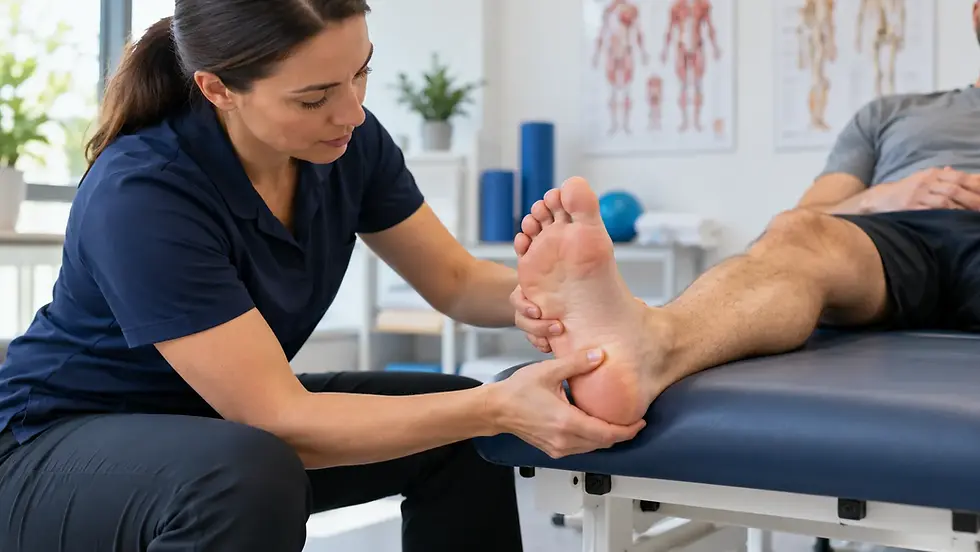
At The Rehab Street, every patient undergoes a detailed evaluation before receiving an orthotic recommendation.
The assessment includes:
Medical and Functional History
Understanding:
Previous polio involvement
Current challenges
Daily activities
Walking limitations
Muscle Strength Testing
Assessment of:
Hip muscles
Quadriceps
Hamstrings
Ankle muscles
Foot control
Gait Analysis
Specialists evaluate:
Knee movement
Foot placement
Balance
Compensatory movements
Joint Assessment
Checking:
Range of motion
Contractures
Joint alignment
Custom Fabrication
Based on findings, the appropriate brace design is selected and customised.
Fitting and Training
Patients receive guidance on:
Wearing the brace correctly
Walking safely
Maintaining skin health
Adjusting to the device
Why Choose The Rehab Street for Polio Rehabilitation?
Choosing the right orthotic centre plays an important role in treatment success.
The Rehab Street focuses on personalised care through:
Specialist Orthotic Expertise
Our team understands complex lower limb conditions including:
Polio weakness
Post-polio syndrome
Foot drop
Knee instability
Mobility limitations
Custom-Made Orthosis
Every brace is designed according to individual requirements rather than using generic solutions.
Complete Mobility Approach
Treatment includes:
Orthotic assessment
Brace fabrication
Footwear solutions
Gait training
Rehabilitation guidance
Advanced Materials and Technology
Options include:
Polypropylene
Carbon fibre
Modern joint mechanisms
Custom footwear solutions
Polio Leg Treatment in Gurgaon — Expert Support Near You
Patients from Gurgaon and Delhi NCR can access specialised orthotic rehabilitation at The Rehab Street.
The Gurgaon clinic serves individuals from:
Gurgaon
Sector 50
DLF areas
South City
Sohna Road
Faridabad
Nearby NCR regions
Gurgaon Clinic Address:C 616, Sixth Floor, Nirvana Courtyard Market, Sector-50, Gurgaon
Delhi Clinic Address:H-13, Masjid Moth, Greater Kailash 2, New Delhi
No referral is required for consultation. Patients can directly schedule an assessment with the orthotic specialists.
FAQs
Can polio weakness in legs improve?
Yes, mobility can often improve with proper rehabilitation and customised orthotic support. While damaged nerves cannot be completely repaired, braces and therapy can improve stability, walking efficiency, and independence.
Which brace is best for a polio-affected leg?
The correct brace depends on the muscles affected. KAFO braces are commonly used when knee weakness is present, while AFO braces are suitable for ankle and foot weakness.
Is a polio caliper still used today?
Yes. Traditional polio calipers are still used, but modern versions are lighter, more comfortable, and customised according to patient requirements.
Can adults benefit from polio braces?
Yes. Adults who have lived with polio weakness for many years can benefit from reassessment and modern orthotic solutions, especially if walking has become more difficult.
Does post-polio syndrome require new treatment?
Yes. PPS often requires reassessment because muscle strength and walking patterns may change over time. Updated braces, energy-saving strategies, and rehabilitation can improve daily function.
How long does a KAFO brace last?
The lifespan depends on material, usage, maintenance, and changes in body condition. Regular check-ups help maintain proper function and comfort.
Final Thoughts
Polio-related leg weakness may be permanent, but reduced mobility does not have to be. With modern orthotic technology, customised KAFO and AFO braces, and professional rehabilitation guidance, many polio survivors can achieve safer and more confident movement.
A personalised assessment is the first step toward finding the right solution for your condition.
For expert Polio Leg Treatment in Gurgaon, The Rehab Street provides comprehensive orthotic care designed around your mobility goals, comfort, and long-term independence.


Comments