


Plantar Fasciitis Treatment in Delhi NCR: How Long Does Recovery Take?
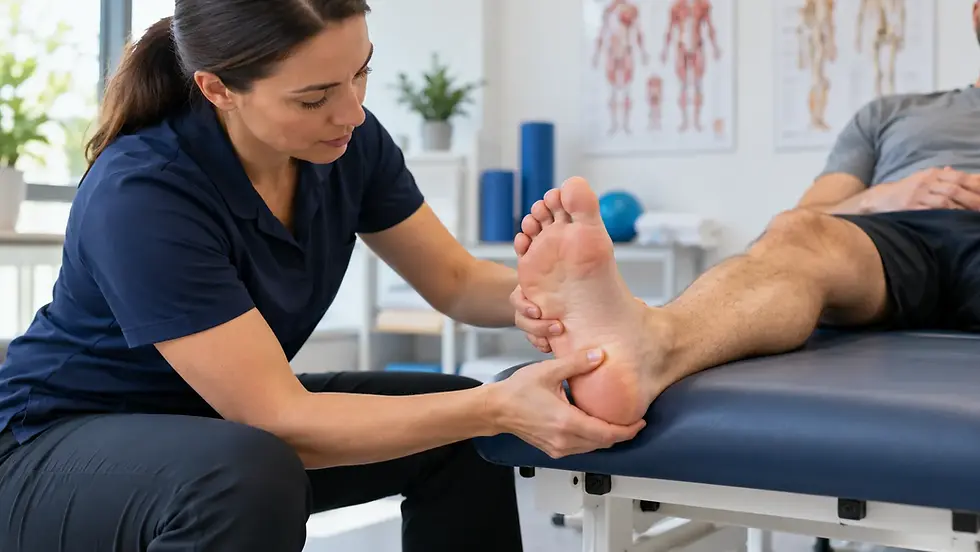
That sharp pain under your heel when you take your first few steps in the morning can make even a normal day difficult.
If the pain improves after you walk for a while but returns after prolonged standing, walking or exercise, plantar fasciitis may be one possible cause.
One of the first questions people seeking Plantar Fasciitis Treatment in Delhi NCR ask is:
“How long will it take for my heel pain to get better?”
There is no single recovery time that applies to everyone. Some people begin noticing meaningful improvement within several weeks, while others with persistent or long-standing symptoms may require several months of consistent rehabilitation.
The good news is that plantar fasciitis is commonly managed without surgery. Mayo Clinic notes that most people recover within several months with conservative treatment, while the American Academy of Orthopaedic Surgeons reports that more than 90% improve within 10 months after beginning simple nonsurgical treatment.
What often matters most is identifying why the plantar fascia is being repeatedly overloaded and addressing those contributing factors instead of focusing only on temporary pain relief.
At THE REHAB STREET, plantar fasciitis management can include assessment of foot mechanics and appropriate treatment strategies such as orthotic or insole support where clinically indicated.
What Is Plantar Fasciitis?
The plantar fascia is a strong band of connective tissue that runs across the bottom of the foot from the heel towards the toes. It helps support the arch and plays an important role when you stand, walk and run.
Repeated or excessive loading of this tissue can lead to pain around the underside of the heel.
Although the condition is traditionally called plantar fasciitis, contemporary clinical discussions also use the term plantar fasciopathy because persistent cases can involve more than simple inflammation.
A typical symptom is pain near the heel that is especially noticeable during the first few steps after getting out of bed or after sitting for a prolonged period. Pain may also increase after extended walking or standing.
How Long Does Plantar Fasciitis Take to Heal?
For many patients, plantar fasciitis recovery should be thought of in months rather than days.
A mild, relatively recent case may respond more quickly once aggravating activities are modified and an appropriate rehabilitation programme is followed. Long-standing plantar fasciitis may require considerably more time because the tissue has often been exposed to repeated stress for months before professional treatment begins.
A practical way of understanding recovery is to think in stages rather than expecting one exact deadline.
Early Stage: The First Few Weeks
The initial goal is usually to reduce excessive loading of the painful area while maintaining as much comfortable activity as possible.
Depending on the individual assessment, management may involve modifying aggravating activities, selecting more supportive footwear, stretching and beginning appropriate rehabilitation exercises.
Pain may still be present during this period.
The important question is not simply whether the heel is completely pain-free. Your clinician may instead look for trends such as:
less severe pain during the first steps in the morning,
improved walking tolerance,
less discomfort after prolonged standing,
better ankle and foot mobility,
and gradually improved ability to complete normal daily activities.
Intermediate Stage: Approximately 6–12 Weeks
With consistent management, many people may start noticing clearer functional improvement during this period, although recovery varies significantly between individuals.
Treatment should progressively address the factors contributing to excessive stress on the plantar fascia.
This may involve appropriate strengthening, flexibility work, footwear modification and, where clinically appropriate, foot orthoses or insoles.
Current clinical practice guidance recommends plantar fascia-specific stretching and calf stretching for people with plantar heel pain. It also supports interventions such as manual therapy and taping in appropriate cases.
The same guideline advises that foot orthoses should not be relied upon as an isolated treatment for short-term pain relief. They may, however, be incorporated into a broader treatment programme when appropriate.
Longer-Term Recovery: Several Months
Persistent plantar fasciitis can require several months of structured management.
This does not necessarily mean that treatment has failed.
Connective tissues adapt gradually, and symptoms may fluctuate depending on walking volume, work demands, exercise, footwear and adherence to rehabilitation.
AAOS reports that more than 90% of people with plantar fasciitis improve within 10 months after beginning simple nonsurgical treatment.
The objective should therefore be progressive improvement in pain and function, rather than expecting the condition to disappear immediately.
What Can Make Plantar Fasciitis Recovery Take Longer?
Two people with apparently similar heel pain can have very different recovery times.
Several factors may influence how quickly symptoms improve.
1. How Long You Have Had the Pain
A relatively recent episode may behave differently from heel pain that has persisted for six months or longer.
People sometimes continue working, running or exercising through worsening symptoms because the discomfort temporarily eases once they start moving.
By the time treatment begins, the problem may already have become persistent.
Early assessment can help identify contributing factors before this cycle continues.
2. Your Daily Standing and Walking Load
Delhi NCR professionals working in healthcare, retail, hospitality, manufacturing, security and other occupations may spend many hours on their feet.
Even an appropriate treatment programme has to account for the amount of load placed on the foot throughout the day.
Treatment therefore needs to fit your real lifestyle rather than simply prescribing generic exercises.
3. Footwear
Shoes affect the way forces are distributed through the foot.
Worn-out footwear, inadequate support or footwear that is unsuitable for an individual's activity may contribute to symptoms.
Your clinician may therefore examine your usual shoes as part of the overall assessment.
4. Ankle and Calf Mobility
Restricted ankle movement or calf tightness may change how forces travel through the lower limb during walking.
This is one reason plantar fasciitis rehabilitation commonly considers more than the painful spot itself.
5. Foot Mechanics
Foot structure and movement patterns vary considerably between individuals.
Rather than assuming that every person with heel pain needs the same insole, a proper evaluation should consider how the foot functions during standing and movement.
6. Sudden Changes in Activity
A rapid increase in running distance, gym training, walking, trekking or time spent standing can increase tissue loading faster than the body is prepared to tolerate.
Recovery often involves adjusting that load and gradually rebuilding capacity rather than simply stopping every activity.
7. Inconsistent Rehabilitation
Stretching or exercising only when the heel hurts may not produce the same result as following a structured programme consistently.
Plantar fasciitis rehabilitation is usually a process rather than a one-time treatment.
What Does Plantar Fasciitis Treatment Usually Include?
Effective Plantar Fasciitis Treatment should begin with an appropriate assessment.
The objective is not simply to locate the painful area. A clinician may also evaluate factors such as symptom history, ankle mobility, calf flexibility, foot mechanics, footwear, activity level and occupational demands.
Treatment will depend on those findings.
Activity Modification
Complete inactivity is not automatically necessary.
Instead, activities that significantly aggravate symptoms may need to be temporarily reduced or modified while maintaining tolerable movement where appropriate.
For example, a runner may temporarily reduce running volume or switch some sessions to lower-impact training while rehabilitation progresses.
Plantar Fascia and Calf Stretching
Stretching is one of the better-supported conservative interventions for plantar heel pain.
The 2023 clinical practice guideline recommends plantar fascia-specific stretching along with gastrocnemius and soleus stretching to help reduce pain and improve function.
The important point is that exercises should be performed correctly and form part of an appropriate overall programme.
Progressive Strengthening
Rehabilitation should also consider the capacity of the foot and lower limb to tolerate everyday load.
Depending on assessment findings, strengthening may target muscles around the foot, ankle and lower limb.
Progression matters.
Doing too little may not provide enough stimulus for adaptation, while increasing the load too aggressively can aggravate symptoms.
Footwear Advice
Supportive footwear may help reduce excessive stress on the plantar fascia.
Mayo Clinic advises choosing shoes with good arch support, cushioning and supportive soles and replacing worn-out athletic footwear.
The best shoe, however, is not necessarily identical for every patient.
Orthotics and Insoles
Orthotics can be useful for selected patients, particularly when they are incorporated into a broader management programme.
They should not automatically be viewed as a complete cure on their own.
Clinical practice guidance specifically recommends against using prefabricated or custom orthoses as an isolated short-term treatment, while supporting their use in combination with other interventions where appropriate.
At THE REHAB STREET, assessment can help determine whether customised foot support or insoles may be appropriate for your individual mechanics and symptoms.
Taping
Foot taping may provide short-term pain and functional improvement for some patients when combined with other physiotherapy interventions.
It can sometimes be useful while longer-term rehabilitation strategies are being implemented.
Night Splints
People whose biggest complaint is severe pain during their first morning steps may occasionally benefit from a night splint.
The 2023 clinical practice guideline recommends considering a one- to three-month night-splint programme for people who consistently experience first-step morning pain.
A clinician can determine whether this is appropriate for you.
Is Rest Enough to Cure Plantar Fasciitis?
Usually, simply resting until the pain disappears does not address every factor that may have contributed to the problem.
Reducing aggravating activity can be valuable, particularly during a painful flare-up.
However, if the same activity level, footwear, mobility restrictions or loading pattern is resumed without addressing relevant contributing factors, symptoms may return.
A more complete approach generally combines appropriate load management with rehabilitation and modification of contributing factors.
Do You Need an X-Ray or MRI?
Not everyone with plantar fasciitis needs imaging.
Diagnosis can often be made from the medical history and physical examination. Mayo Clinic notes that imaging is usually unnecessary, although an X-ray, MRI or another investigation may be considered if a clinician needs to rule out another cause of heel pain, such as a stress fracture.
This is important because not every case of heel pain is plantar fasciitis.
Persistent or unusual symptoms deserve an appropriate professional assessment rather than self-diagnosis.
Does a Heel Spur Mean You Need Surgery?
Not necessarily.
Heel spurs are commonly misunderstood.
AAOS notes that many people with heel spurs do not have heel pain and that heel spurs are not considered the cause of plantar fasciitis pain.
Finding a heel spur on an X-ray therefore does not automatically mean that surgery is required.
In fact, surgery for plantar fasciitis is uncommon and is generally reserved for persistent cases that have not responded to prolonged appropriate nonsurgical management.
When Should You Seek Professional Treatment?
Consider obtaining a professional assessment if heel pain:
continues despite modifying aggravating activity,
repeatedly returns,
affects your ability to walk or work,
prevents you from exercising normally,
becomes progressively worse,
has persisted for several weeks,
or does not behave like typical plantar-fascia pain.
You should also seek medical evaluation sooner if pain followed significant trauma, you cannot comfortably bear weight, or you have unusual swelling, neurological symptoms or other concerning symptoms.
These features may indicate that another condition needs to be considered.
How Can You Tell Whether Treatment Is Working?
Do not judge recovery only by asking whether you have zero pain.
Useful signs of progress can include:
Morning pain becoming less intense.Your first few steps are becoming more comfortable.
Pain settling faster.A flare-up after walking or exercise does not last as long.
Greater walking tolerance.You can walk farther before symptoms begin.
Improved standing tolerance.Work and normal daily activities become easier.
Improved mobility and strength.Exercises that were initially difficult become more manageable.
Gradual return to activity.You can progressively tolerate more exercise without producing a substantial or prolonged increase in symptoms.
Recovery is rarely perfectly linear. An occasional bad day does not necessarily mean you have returned to the beginning.
The more useful question is whether your overall function is improving over time.
When Can You Start Running or Exercising Again?
There is no universal calendar date for returning to running.
Return to sport should be based on function and load tolerance rather than simply waiting a predetermined number of weeks.
A rehabilitation professional may consider factors such as walking tolerance, pain behaviour, foot and ankle strength, mobility and response to progressively higher-impact activity.
Returning to full training too quickly can substantially increase the load on tissues that are still adapting.
A graded progression is generally more sensible than going directly from complete rest to previous training volume.
Why Does Plantar Fasciitis Sometimes Keep Coming Back?
Recurring symptoms often indicate that pain reduction occurred before the underlying loading problem was adequately addressed.
For example, symptoms might improve temporarily with rest, yet return when someone resumes long working hours, running or another demanding activity at the same previous level.
Long-term management therefore needs to consider:
how much load the foot is experiencing, how much load it can currently tolerate, and whether rehabilitation is progressively increasing that capacity.
That is one reason personalised assessment can be more useful than repeatedly relying on generic online exercises.
Plantar Fasciitis Treatment in Delhi NCR at THE REHAB STREET
When heel pain has persisted for weeks or repeatedly returns, simply trying one home remedy after another can delay appropriate assessment.
At THE REHAB STREET, the aim of plantar fasciitis management is to understand the factors contributing to your symptoms rather than focusing exclusively on temporary pain relief.
An individual assessment may consider your symptoms, daily activity, footwear, foot mechanics and other relevant factors before determining an appropriate management plan.
Where indicated, treatment strategies may include rehabilitation advice and suitable foot-support solutions such as orthotics or insoles.
If you are searching for Plantar Fasciitis Treatment in Delhi NCR, getting the correct assessment early can help you understand what is causing your heel pain, what needs to change and what a realistic recovery plan may look like.
FAQs
How quickly can plantar fasciitis improve?
Recovery varies. Some people experience improvement over the first several weeks, while full recovery can take several months. Mayo Clinic states that most people recover within a few months using conservative treatment, while AAOS reports that more than 90% improve within 10 months of beginning simple nonsurgical treatment.
Can plantar fasciitis heal on its own?
Symptoms can sometimes settle, particularly when the activity that triggered the problem changes. Persistent or recurrent pain, however, may benefit from professional assessment to identify contributing factors and develop an appropriate rehabilitation strategy.
Is walking good for plantar fasciitis?
Walking does not automatically need to be avoided. The appropriate amount depends on symptom severity and how your heel responds. If prolonged walking repeatedly produces substantial or lasting pain, the amount of activity may temporarily need to be modified.
What is the best treatment for plantar fasciitis?
There is no single treatment that is best for every patient. Current evidence supports a multimodal approach based on individual findings. Stretching, appropriate rehabilitation, taping, footwear modification and other interventions may be considered depending on the patient's presentation. Orthoses can form part of treatment but should not be relied upon as the sole short-term intervention.
Are custom insoles necessary for plantar fasciitis?
Not everyone needs custom insoles. Their usefulness depends on the person's symptoms, mechanics and overall treatment plan. A foot assessment can help determine whether an orthotic or another strategy is appropriate.
How long should I wait before getting plantar fasciitis treated?
There is no requirement to wait until the pain becomes severe. If heel pain is affecting walking, work, exercise or normal activity, keeps returning, or is not improving, an assessment can help determine whether plantar fasciitis or another condition is responsible.
The Bottom Line
There is no fixed number of days required to recover from plantar fasciitis.
For many people, meaningful recovery takes weeks to several months, and persistent cases can take longer. What matters is whether symptoms and function are moving in the right direction.
Rather than chasing temporary relief, effective Plantar Fasciitis Treatment in Delhi NCR should focus on accurate assessment, appropriate load management, evidence-informed rehabilitation and relevant contributing factors such as mobility, footwear and foot mechanics.
If heel pain is affecting your walking, work or exercise, THE REHAB STREET can help assess the problem and determine an appropriate treatment pathway.


Comments